Redefining Green Living: The New Standard for Sustainable Lifestyles
By Merve Tuncer
Sustainability is no longer a niche movement — it has become a shared responsibility. Across the world, individuals and families are rethinking how they live, what they consume, and how their choices affect the planet.
“Green living” today is not about perfection or sacrifice. It’s about awareness — understanding the relationship between our lifestyle and the environment. Whether in large cities or small coastal towns, the shift toward more sustainable living is reshaping how homes are built, powered, and experienced.
From eco homes designed with renewable materials to communities that prioritize slow living, the new green lifestyle represents both innovation and intention.
Designing Homes That Work With Nature
The foundation of sustainable living starts at home. Architecture and interior design are now evolving to reflect environmental intelligence.
The most effective sustainable home design principles are simple yet profound: natural ventilation, daylight optimization, energy efficiency, and the use of non-toxic, renewable materials. These features reduce the ecological footprint while enhancing comfort and wellbeing.
In Spain, North Cyprus, UAE, and Türkiye — regions where TEKCECO operates — architects are integrating local traditions into modern green design. Thick stone walls, shaded courtyards, and cross-ventilation are traditional solutions that perfectly align with contemporary energy efficiency standards.
Modern eco homes often include solar panels, smart thermostats, and water-saving systems — technology serving nature rather than replacing it.
Energy Efficiency as a Lifestyle
Energy-efficient living is not just a matter of appliances — it’s a mindset. From choosing LED lighting to optimizing insulation, every small step contributes to a significant impact.
According to the European Energy Agency, residential energy use accounts for over 25% of total emissions. Transitioning to renewable energy and adopting smart technologies can reduce that footprint dramatically.
Simple actions like adjusting heating schedules, unplugging standby electronics, or switching to green energy providers are now seen as the daily acts of modern environmental responsibility.
But energy efficiency is also about long-term resilience. Homes designed for efficiency not only lower utility bills — they also increase property value and comfort, making sustainability both an ethical and economic choice.
The Art of Conscious Consumption
Living sustainably extends beyond architecture and energy. It’s reflected in how we consume, decorate, and manage resources.
Conscious consumption means buying less, choosing better, and reusing more. It’s the principle behind the growing circular economy — a system where materials are kept in use as long as possible through repair, recycling, and creative repurposing.
Sustainable furniture brands are now using reclaimed wood, organic fabrics, and biodegradable finishes. Homeowners are embracing minimalist interiors that focus on functionality and quality over accumulation.
This isn’t austerity — it’s freedom. A home designed with intention allows space for clarity, creativity, and comfort.
Urban Sustainability: Green Living in the City
For many, sustainability may seem easier in rural or coastal areas. Yet the biggest potential for impact lies within cities.
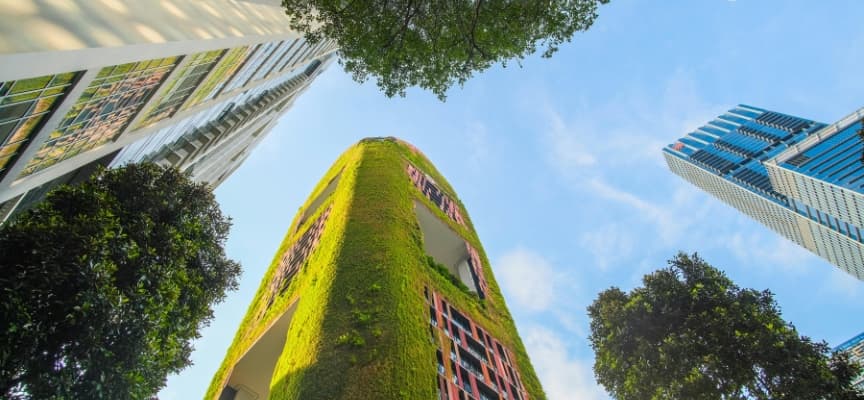
Urban sustainability is about integrating green principles into dense, fast-paced environments — creating balance in the concrete jungle. Rooftop gardens, vertical forests, and shared green courtyards are transforming urban skylines across Europe.
In cities like Malaga, Barcelona, and Dubai, eco-districts are being developed with renewable energy networks, waste recycling hubs, and pedestrian-centered design. These areas redefine what it means to live sustainably in a metropolitan context — proving that green living is not where you live, but how you live.
The Psychology of Sustainable Living
Beyond technology and design, green living is also emotional. Studies show that people who live in eco-friendly environments report higher levels of satisfaction, connection, and mental wellbeing.
Access to natural light, plants, and fresh air reduces stress and improves focus. Living in a community that shares values of sustainability and cooperation fosters a sense of belonging — a feeling often missing in modern urban life.
Sustainability, in this sense, is not only ecological but deeply human. It’s about re-establishing harmony between our inner lives and the external world.
The Future Is Circular
The next phase of sustainable living is circularity — a closed-loop system where waste becomes a resource.
New materials such as hempcrete, recycled steel, and mushroom-based insulation are redefining the construction industry. Composting, greywater systems, and community energy-sharing models are making sustainability local and participatory.
The home of the future won’t just consume less; it will give back — generating energy, collecting rainwater, and supporting biodiversity through integrated green infrastructure.
TEKCECO’s mission aligns with this vision: promoting developments that balance human needs with ecological integrity, creating homes that stand for more than comfort — they stand for conscience.
Every Choice Counts
Adopting a sustainable lifestyle doesn’t require radical change overnight. It begins with simple choices — walking instead of driving, supporting local farmers, choosing recycled products, or reducing water waste.
Each conscious decision, multiplied across millions of people, shapes the trajectory of our planet.
Green living is not a trend to follow; it’s a future to build. The real innovation lies not in technology alone, but in mindset — the willingness to care, to question, and to act.
Living the Future Today
Green living represents more than an environmental philosophy — it’s a cultural evolution. It redefines success not by accumulation, but by balance; not by speed, but by sustainability.
As cities grow and technologies advance, our greatest challenge is to remain connected — to nature, to each other, and to the planet that sustains us.
At TEKCECO, we believe sustainable living is the cornerstone of a better world — where progress and preservation go hand in hand, and where every home becomes a step toward a cleaner, more conscious future.